
 Previous
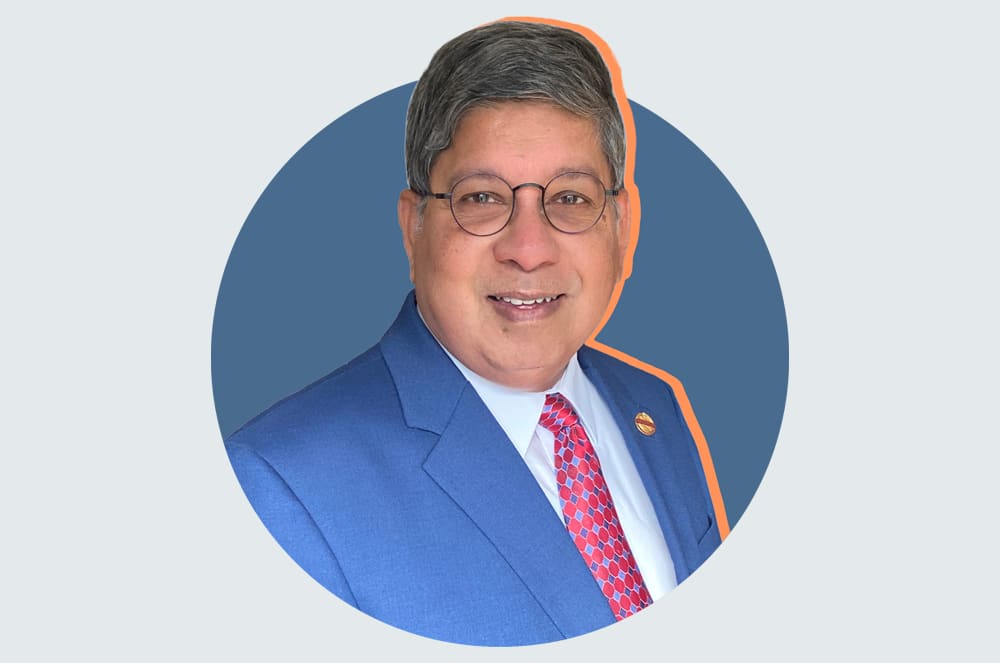
This month we are talking to Dilip Abayasekara, DTM, Toastmasters’ 2005–2006 International President and an Accredited Speaker. A former college professor and administrator, he served as the Host District Chair of the 2025 International Convention in Philadelphia, Pennsylvania, and is a longtime inspirational speaker, coach, and mentor, as well as a pastor.
What is your best piece of leadership advice?
Leadership is not a position. It is an attitude of service and an opportunity to raise the performance of your organization and the individuals in it.
What have you learned about yourself as a leader over the years?
I have gone through a process of self-discovery, including self-evaluation in human behavioral analysis. I’ve learned that my leadership strengths are as an influencer, persuader, and inspirer, and my weaknesses include tendencies toward missing details, wanting to be optimistic rather than logic-based, and making decisions without consulting others. Among the things I discovered, and am still discovering, is that I need to harness the power of collaboration, consulting, and listening to others.
Why should members volunteer to serve as club and District officers?
Club and District leadership roles are the portals to learning leadership. Occasionally I have heard members say that they refrain from taking leadership roles because they joined Toastmasters to learn to speak better, and not to learn leadership. But my leadership experience has given me more opportunities to speak to diverse audiences; it has not only developed my leadership skills, but it has also improved my communication and public speaking skills. Beyond that, it gives me the satisfaction that I am contributing to the success of my club and District. Leadership broadens one’s views beyond self, to service to others.
When you coach speech contestants, what is your main goal?
To bring out the speaker’s authentic voice and allow the speaker to connect with the audience with the special magic unique to each person. Of course, as a coach, I guide the speaker to have solid speech structure, one clear central idea, and a specific purpose with which they guide their listeners. However, the speech content is entirely the speaker’s. I want their light to shine, not mine.
What leadership principles are you able to apply to your work as a pastor?
I found that Toastmasters training is ideal for pastors. Much of what I learned about communication, speech construction and delivery, team building, mentoring, and leading by example were transferable skills for the ministry. I would say Toastmasters fosters the servant leadership model. That is the same type of leadership pastors are called on to exhibit in their work—self-giving, compassionate, and bringing out the best in people.
Hometown:
Lancaster, Pennsylvania
Number of years in Toastmasters:
40
Profession:
Pastor, speaker, and trainer
Hobbies:
Reading, writing, singing, and taking walks in the open air

Share this article


 Previous Article
Related Articles

Communication
5 Questions With Jefferson Fisher

Professional Development